

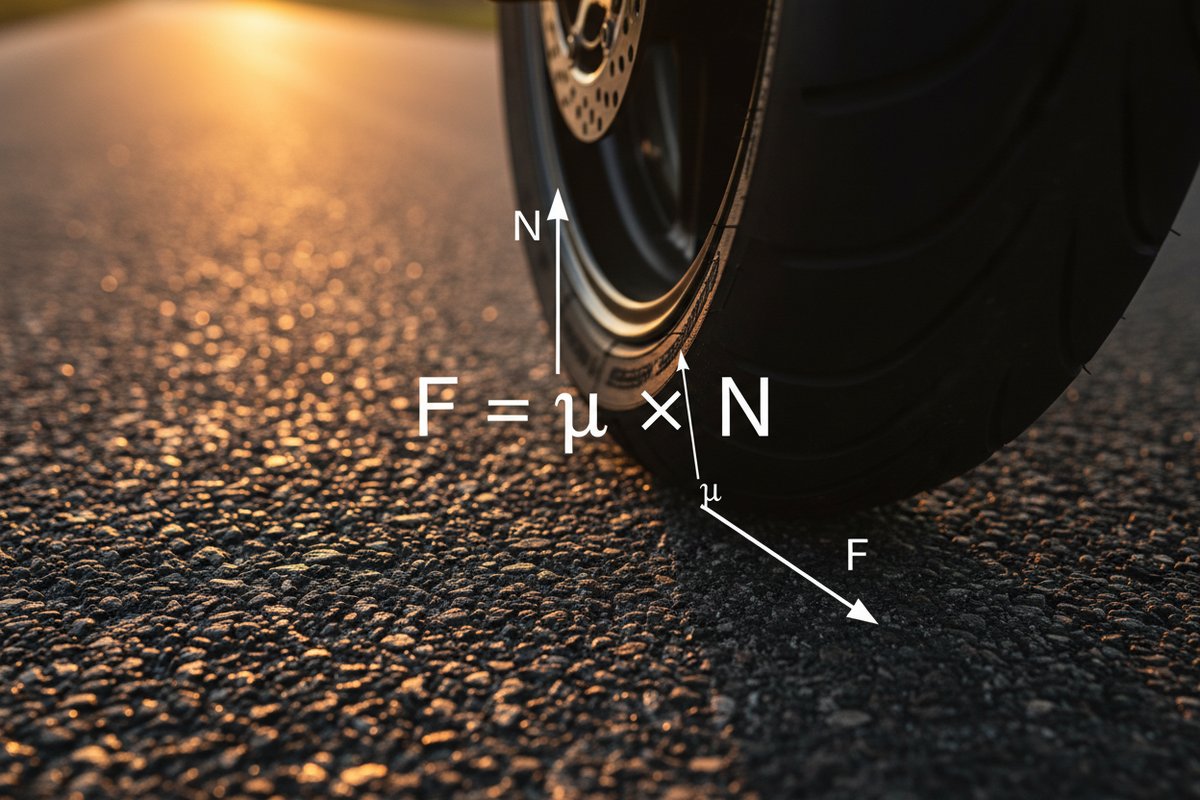
The coefficient of friction is not a constant: it's a negotiation between rubber and road
Grip is not a fixed number: it depends on the force pressing the rubber against the ground, and rebound makes it fluctuate. We explain why stabilizing that force is what maintains real grip.
Read more
Cold rubber has less hysteresis: it grips less and bounces more. We explain what happens in the first kilometers of each ride and why the Gravitational Resonator works the same with cold or hot rub...
Read more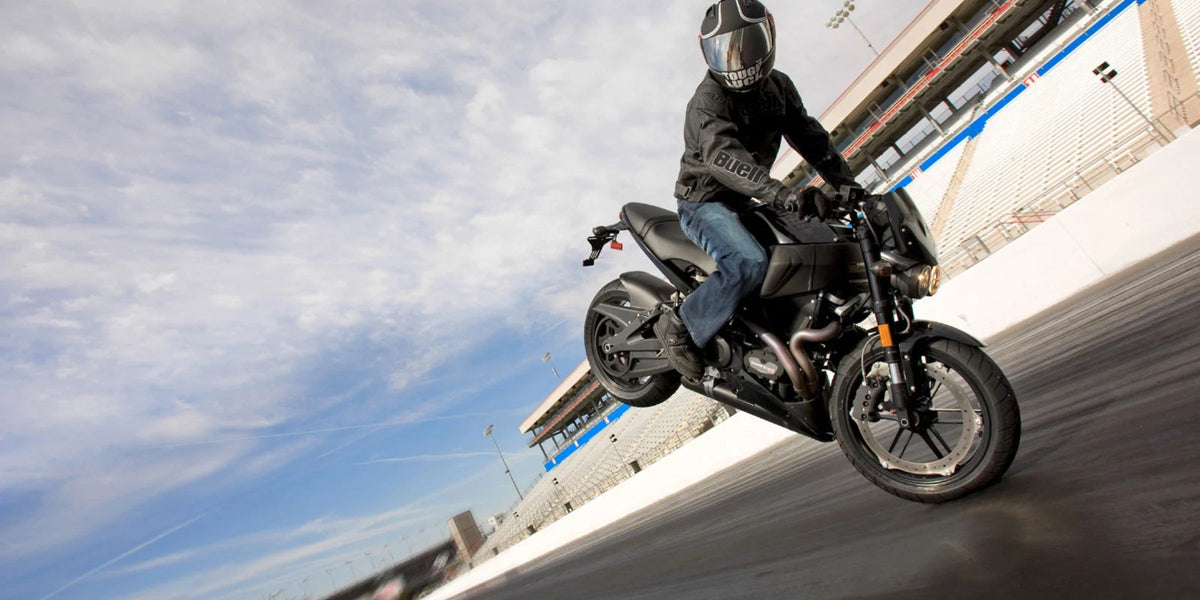
Why does your motorcycle tire bounce? Compressed air turns it into an undamped spring. We explain the physics of the bounce and how to control it.
Read more
Your motorcycle only touches the ground with 92 cm² of rubber. Discover why you lose grip without noticing it and how Oversuspension maintains tire-to-road contact.
Read more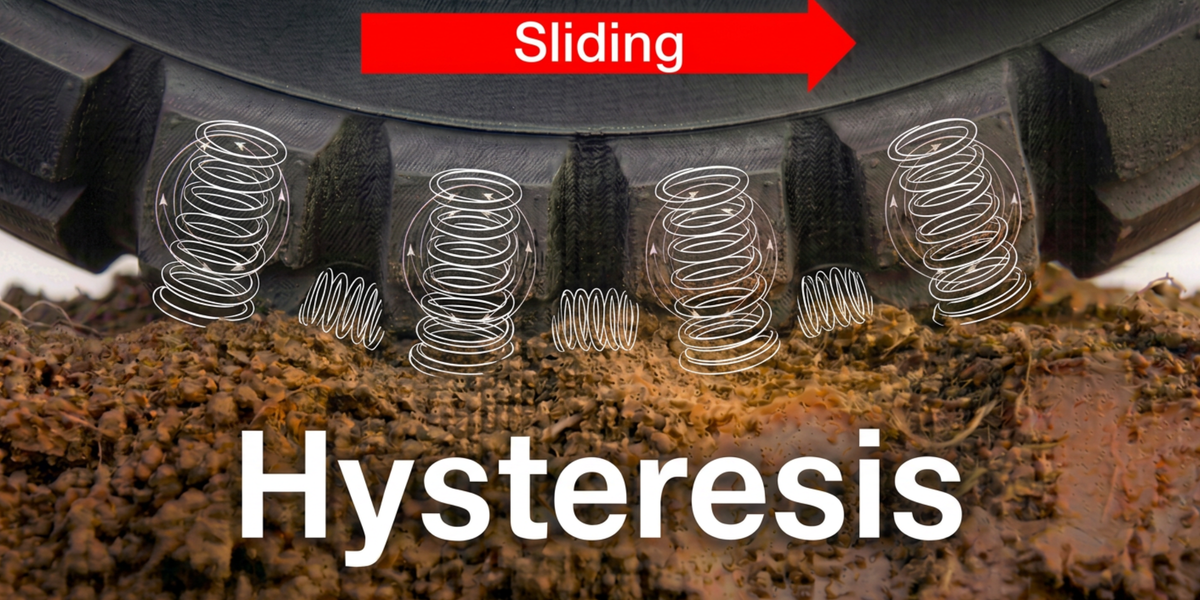
Hysteresis in the rear tire: the physics of grip that nobody explains to you
Rubber hysteresis determines the grip and durability of your rear tire. Silentblocks protect your transmission. But there is a rebound that no viscoelastic material can manage in time. Let us explain.
Read more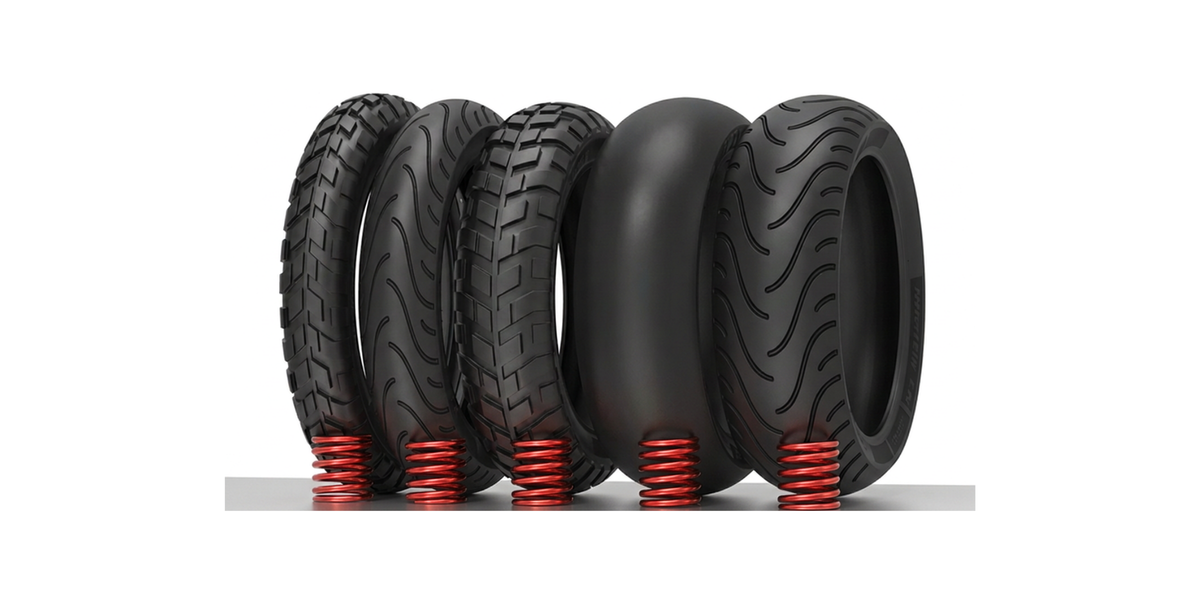
The tire is also a spring. And nobody controls its rebound.
The tire stores and releases energy like a spring, without any internal mechanism to control its rebound. We explain the role of hysteresis, inflation pressure, and why the Oversuspension Gravitati...
Read more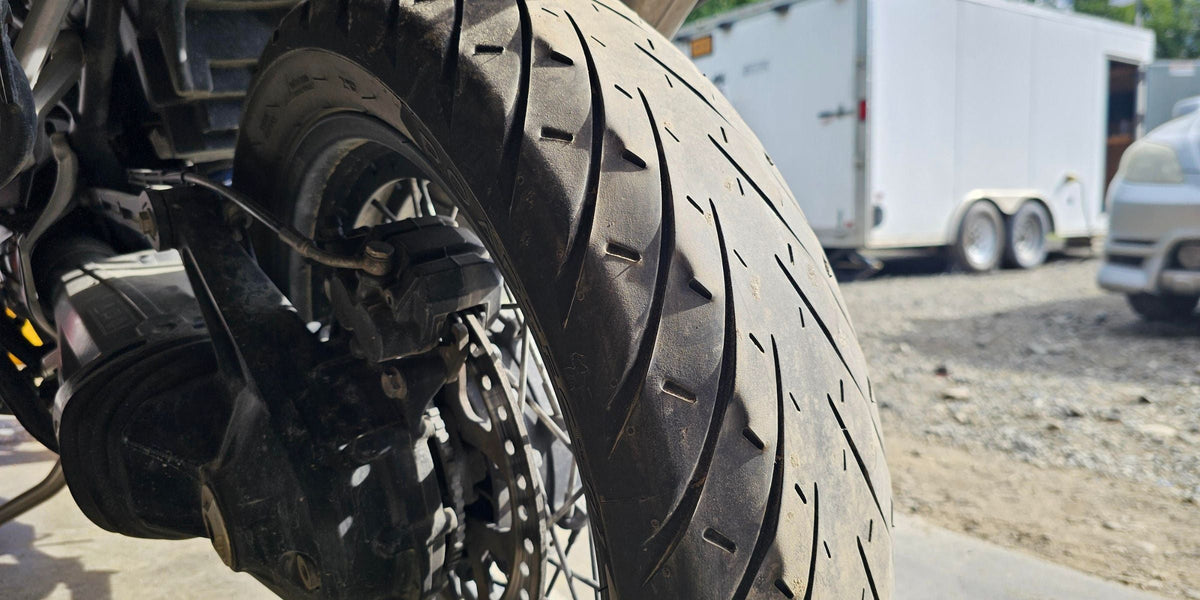
Cupping: why your tire wears unevenly (and it's not always the pressure)
Irregular tire wear—cupping or scalloping—doesn't always stem from pressure or wheel bearings. We explain why tire bounce creates this pattern and how constant contact reduces it.
Read moreBlog posts
The price of the rebound: what it costs you in money, in safety, and in your own body
Rear-wheel bounce comes with three invisible costs: wear and tear on tires, drivetrain, and suspension; loss of traction, braking, and stability; and the physical fatigue the vibration leaves in yo...
Read more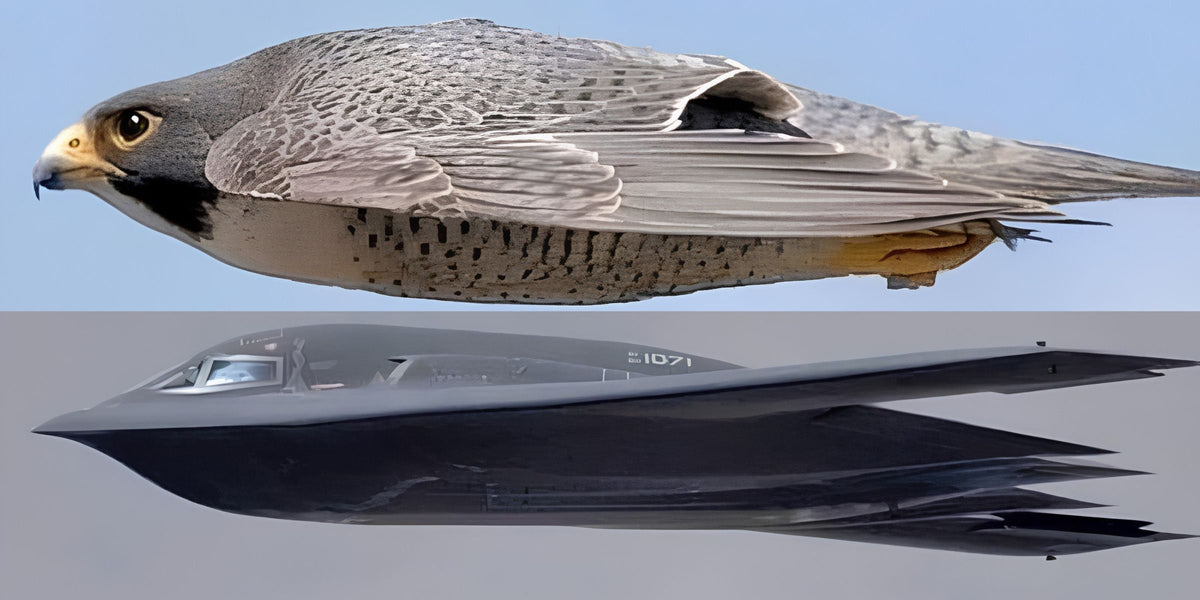
Why did nature solve this before engineering
The peregrine falcon applies aerodynamics it never studied. We explain why physics works whether we understand it or not, and how changing the point of observation solved the tire bounce.
Read more
Resonance: the force that collapses bridges and the one that keeps you glued to the ground
Resonance destroyed the Tacoma Narrows Bridge in 1940. The same physical principle, in anti-phase, is what keeps your tire glued to the road. Here is how.
Read more
free returns

lifetime warranty

try it 93 days

payment in installments