Skip to content

Cart

Your cart is empty

Article: The coefficient of friction is not a constant: it's a negotiation between rubber and road

El coeficiente de fricción no es una constante: es una negociación entre goma y suelo

The coefficient of friction is not a constant: it's a negotiation between rubber and road

In school, you were taught that friction is a fixed number: each pair of materials has its coefficient, and that's it. It’s a useful simplification for passing physics, but for a motorcyclist, it is dangerously incomplete. Because your tire's grip is not a constant etched in stone. It is an ongoing negotiation that is renewed at every instant.

Grip depends on the downward force

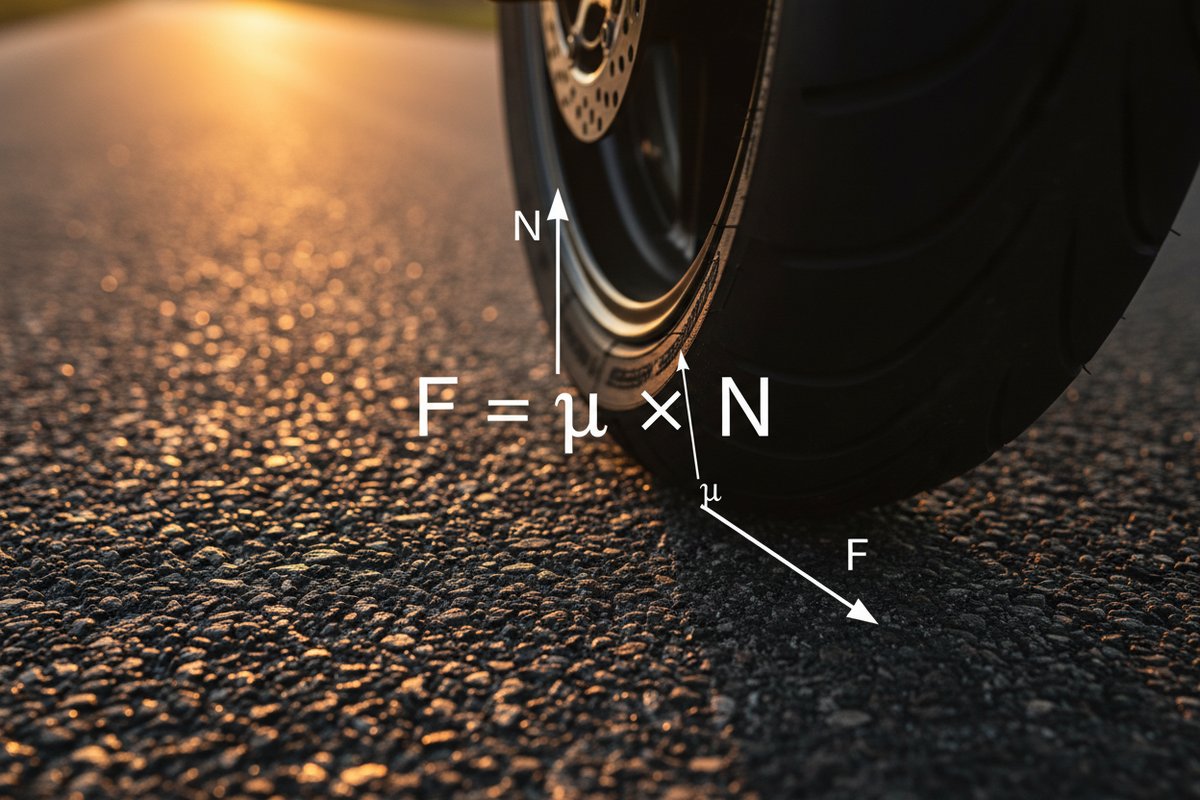
The available friction is proportional to the normal force: the force with which the rubber is pressed against the ground. More vertical load on the tire, more available grip. Less load, less grip. And here is the trap that the school model hides.

When the tire bounces, the normal force is not stable: it fluctuates violently. At the peak of the bounce, the load on the rubber drops—sometimes to zero, when the wheel is in the air. And with the normal force dropping, the available grip drops with it, even if the compound is the same, the asphalt is the same, and the temperature is the same.

You don’t lose grip because the rubber is worse. You lose it because, during the bounce, there is no longer a force pressing the rubber against the ground.

Stabilizing the normal force is stabilizing the grip

This is where the Resonator changes the equation. By counteracting the bounce, it keeps the normal force much more constant: the rubber remains pressed against the ground instead of being relieved over every bump. And a stable normal force means a stable effective coefficient of friction—a grip that doesn't disappear and reappear dozens of times per kilometer.

The premium tire and the correct pressure define the ceiling of possible grip. But it is the stability of the normal force that decides how much of that ceiling you have available in every real instant. A very high ceiling is useless if the load supporting it collapses at every irregularity.

Grip is not a number. It is a force that presses the rubber against the ground. And it only grips as long as that force is not interrupted.

And the force that presses the rubber depends on applying it at the right moment.
FIND YOUR KIT

FIND YOUR KIT HERE

Blog posts

El precio del rebote: lo que te cuesta en dinero, en seguridad y en tu propio cuerpo

The price of the rebound: what it costs you in money, in safety, and in your own body

Rear-wheel bounce comes with three invisible costs: wear and tear on tires, drivetrain, and suspension; loss of traction, braking, and stability; and the physical fatigue the vibration leaves in yo...

Read more
Por qué la naturaleza resolvió esto antes que la ingeniería

Why did nature solve this before engineering

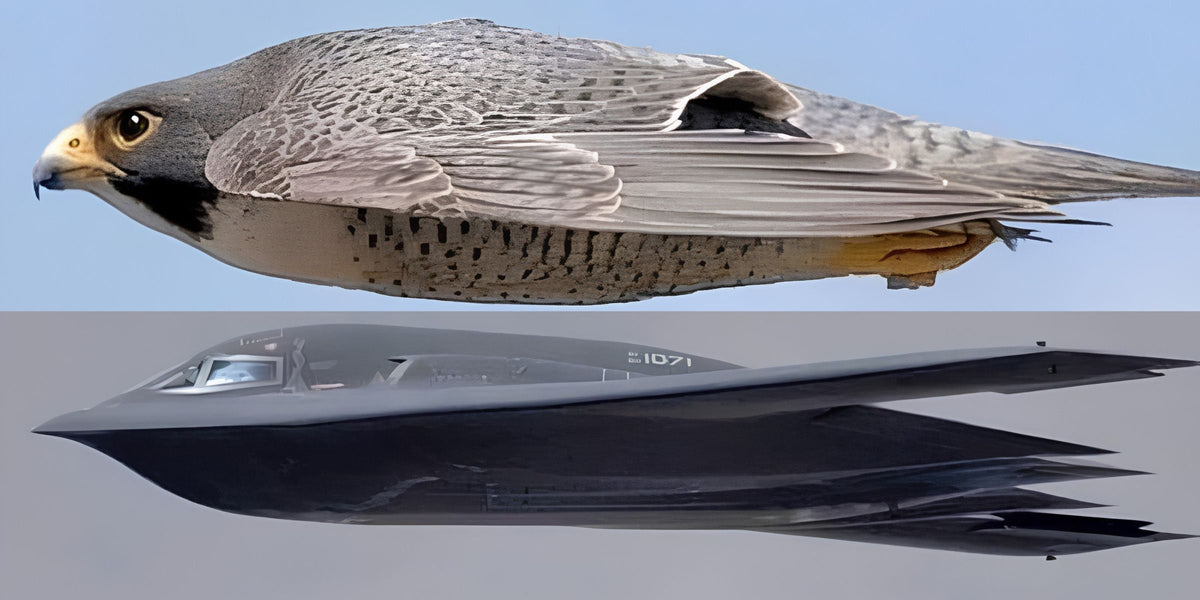
The peregrine falcon applies aerodynamics it never studied. We explain why physics works whether we understand it or not, and how changing the point of observation solved the tire bounce.

Read more
Resonancia: la fuerza que derriba puentes y la que te mantiene pegado al suelo

Resonance: the force that collapses bridges and the one that keeps you glued to the ground

Resonance destroyed the Tacoma Narrows Bridge in 1940. The same physical principle, in anti-phase, is what keeps your tire glued to the road. Here is how.

Read more
La energía no se crea ni se destruye. Por eso tu rebote tiene que ir a algún sitio.

Energy is neither created nor destroyed. That's why your rebound has to go somewhere.

The first law of thermodynamics explains why your tire's bounce doesn't just disappear. We explain how the Gravitational Resonator redirects it toward grip instead of letting it turn into damage.

Read more
El coeficiente de fricción no es una constante: es una negociación entre goma y suelo

The coefficient of friction is not a constant: it's a negotiation between rubber and road

Grip is not a fixed number: it depends on the force pressing the rubber against the ground, and rebound makes it fluctuate. We explain why stabilizing that force is what maintains real grip.

Read more
El giroscopio invisible: por qué tu moto se mantiene en pie sola (y qué la desestabiliza)

The invisible gyroscope: why your motorcycle stays upright on its own (and what makes it unstable)

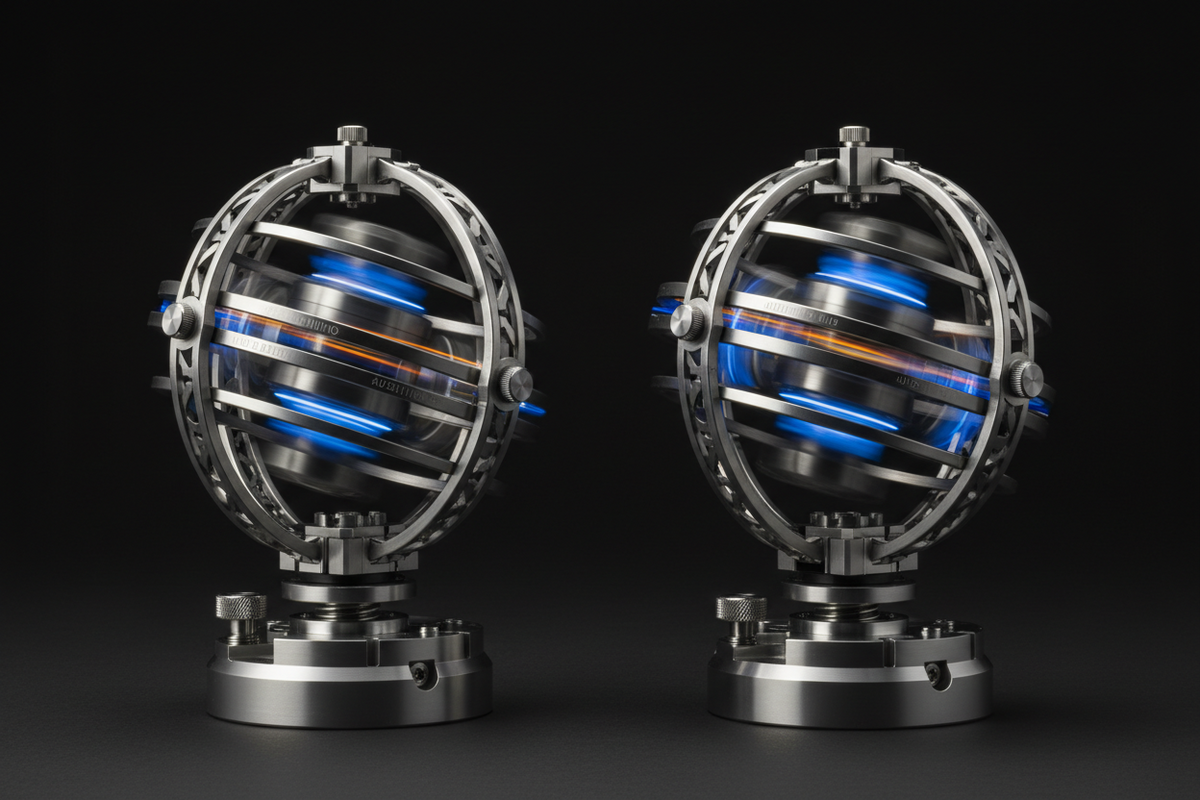
A spinning wheel is a gyroscope that keeps your bike stable, but only while it’s on the ground. We explain how tire bounce interrupts that effect, and how the Resonator keeps it anchored.

Read more

free returns

lifetime warranty

try it risk-free

payment in installments