
Why did nature solve this before engineering
There is an idea that Nicola Bragagnolo repeats in his videos that seems like a philosophical detour until you understand it is the core of everything: nature applies physical laws it has never studied.
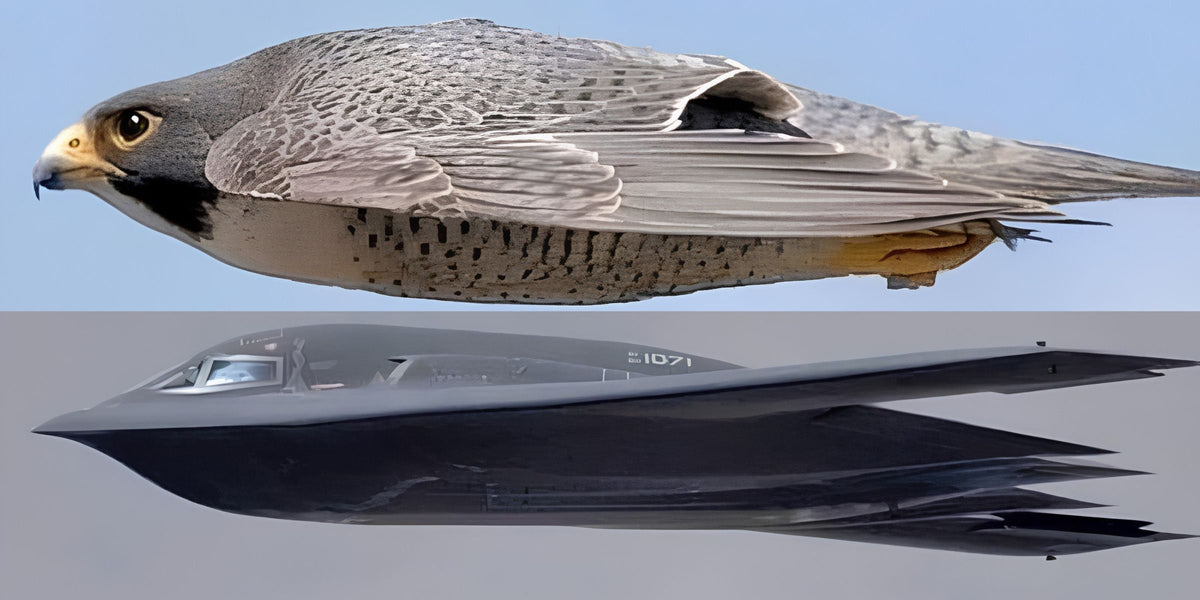
The peregrine falcon knows nothing of aerodynamics. It has not read a single treatise on variable-wing geometry. And yet, when it dives at over 300 km/h, it folds its wings at the exact angle that a Eurofighter engineer took years to calculate. The animal doesn't know why it works. It simply does, because evolution etched it into its body through millions of attempts.
Physics does not wait for us to understand it to function. It works regardless of whether we comprehend it or not.
This matters for your motorcycle tire more than it seems.
The mistake of looking only at what we know how to measure
For decades, suspension engineering worked on what it could comfortably measure: spring compression, oil speed in the shock absorber, swingarm geometry. Everything quantifiable, controllable, tabulated.
Tire rebound was left out of that picture. Not because it didn't exist, but because it happened on a time scale that was inconvenient to measure and at a point—the unsprung mass—where no one was looking. It was known that the wheel vibrated. It was accepted as part of the landscape. Like the falcon that flies without knowing physics, the bike bounced without anyone managing that bounce.
Leonardo da Vinci wrote it in the Codex Atlanticus over five hundred years ago: more important than what you observe is where you position yourself to observe it. The frame of reference determines what you see.
Changing the observation point
The entire story of Oversuspension is, at heart, a change in the frame of reference. The industry observed rebound from the suspension—from above, from the sprung mass—and from there, the problem was invisible or seemed unsolvable. Nicola observed it from the tire, from the unsprung mass, from inside the problem.
Same phenomenon. Different observation point. And suddenly, the problem was not only visible: it could be solved.
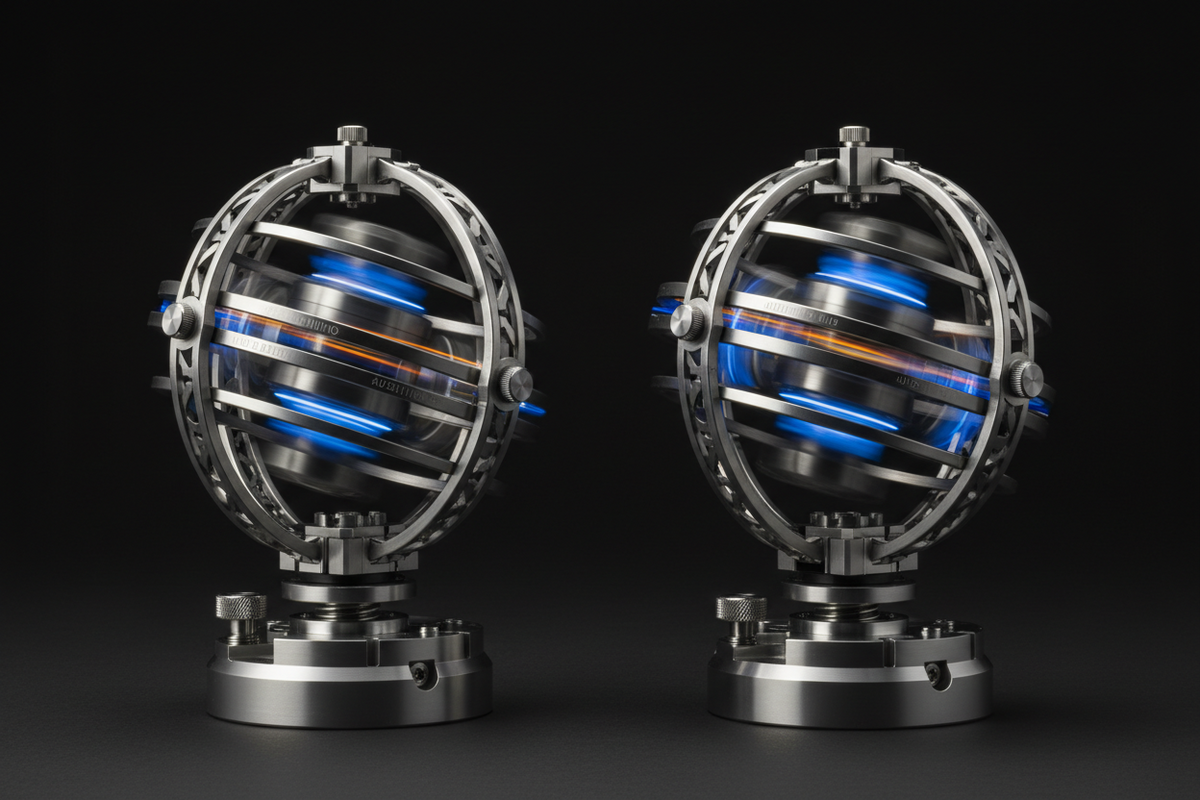
The Gravitational Resonator does not invent any new physical law. It does not cheat nature. It does exactly what the falcon does with its wings: apply a physical principle that was always available, at the right place and the right time. The difference is that here, for once, we do know why it works.
Nature has spent millions of years keeping things stuck to the ground when it suits them. We just took a little longer to understand how.
The physics that explains this includes resonance.