
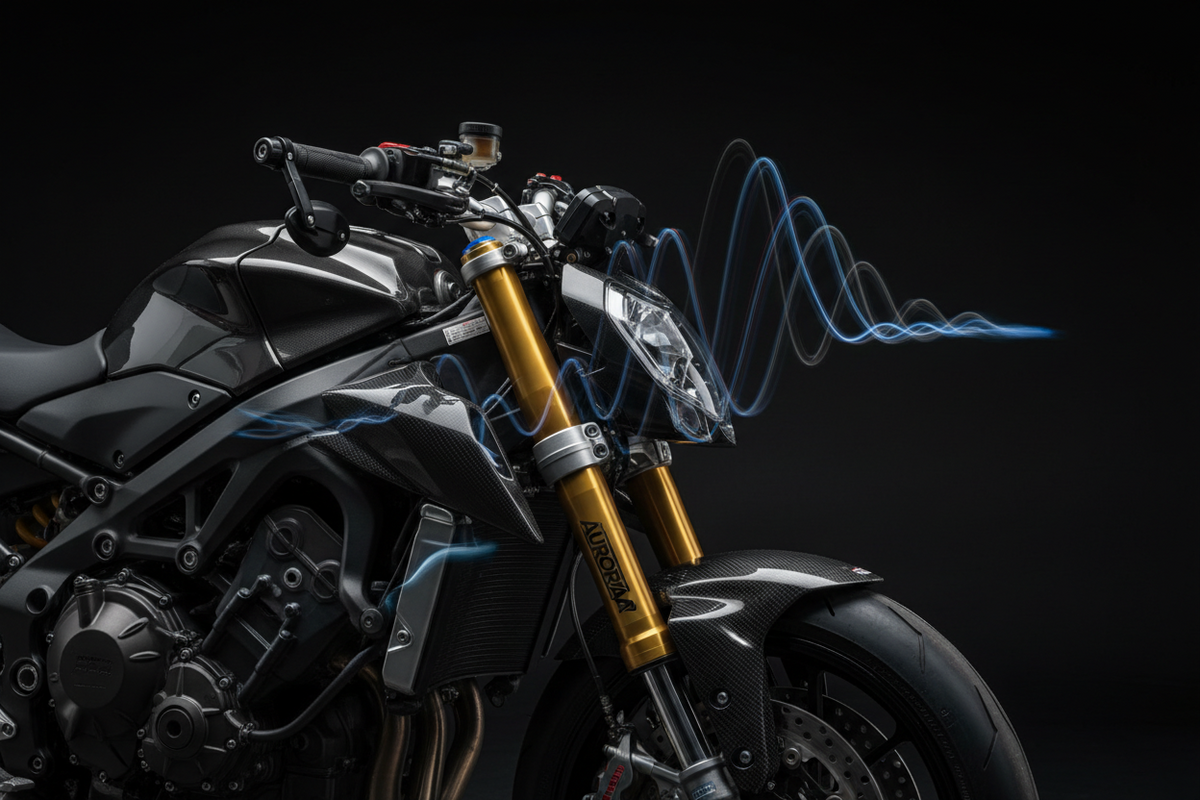
Chattering, shimmy, and rear bounce: three vibrations that are often confused (and are not the same)
Chattering, shimmy, rebound, wobble. In the motorcycle world, these words are often used as if they meant the same thing, but they do not. They are three distinct phenomena, with distinct origins and distinct consequences—and confusing them leads to looking for the solution in the wrong place. Let's sort them out.
Chattering: front-end vibration under braking
The word comes from the English "chatter"—the sound teeth make when cold. Chattering is a high-frequency vibration that appears primarily in the front end during the braking phase and corner entry, and also at the point of maximum lean.
It is produced when a resonance wave is generated between the suspension components, the brake, and the tire carcass. If the frequency of that vibration matches the natural frequency of the motorcycle's assembly, both amplify each other—resonance—and the result is the tremor that riders describe as "chattering." It is one of the most difficult problems to eradicate even in MotoGP, because it depends on dozens of components at once, and what works on one circuit does not help on another.
Shimmy: the steering wobble
Shimmy is something completely different. It is an oscillating side-to-side movement of the handlebar, a steering wobble that usually appears during deceleration, typically below a certain speed. In its most violent version, it is known as a wobble or "headshake," and it can become dangerous if not controlled.
Its typical causes are related to geometry and condition: tire wear or incorrect pressure, loose steering bearings, poor balancing, or weight distribution. The classic advice for mild shimmy—holding the handlebar with less tension at reduced speed—usually calms it, but if it is recurring, the bike must be taken to a professional.
Rear tire rebound: the one almost no one names
And then there is the third, the quietest and the one that least appears in guides: rear tire rebound. It is not a braking chatter or a steering wobble. It is the rear tire that, upon impacting irregularities in the asphalt, lifts off the ground for milliseconds and falls back down, over and over, thousands of times per kilometer.
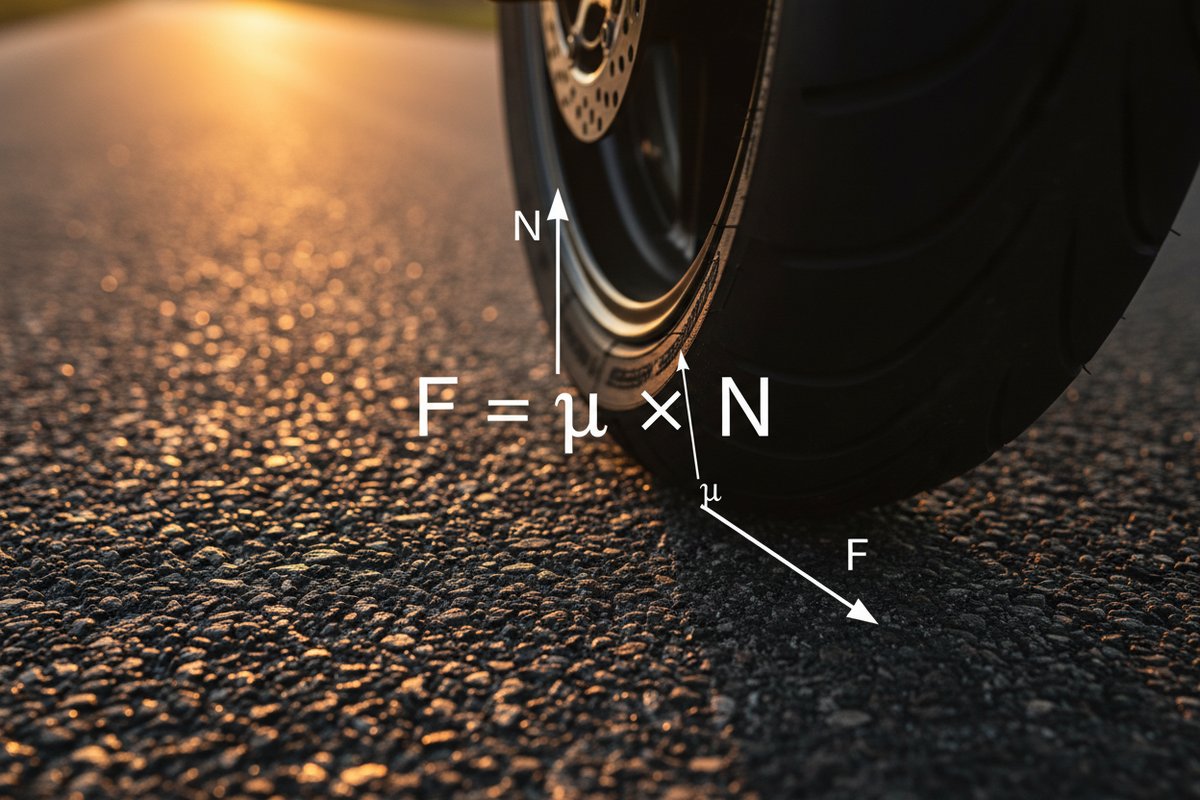
The tire is an elastic casing with compressed air inside: a spring that rebounds without anything to control it. Unlike chattering—associated with the front and braking—and shimmy—associated with the steering—rear rebound acts during acceleration and on any bumpy section, and its main consequence is not just vibration: it is loss of traction and grip.
Three phenomena, three different solutions
Confusing them costs time and money. Shimmy is tackled with geometry, bearings, and balancing—workshop work. Chattering is managed with suspension settings, pressure, chassis, and tires—a fine compromise that not even MotoGP teams eliminate entirely. And tire rebound has its own specific solution, because it is born at a point—unsprung mass—and on a time scale that neither the suspension nor the geometry can reach.
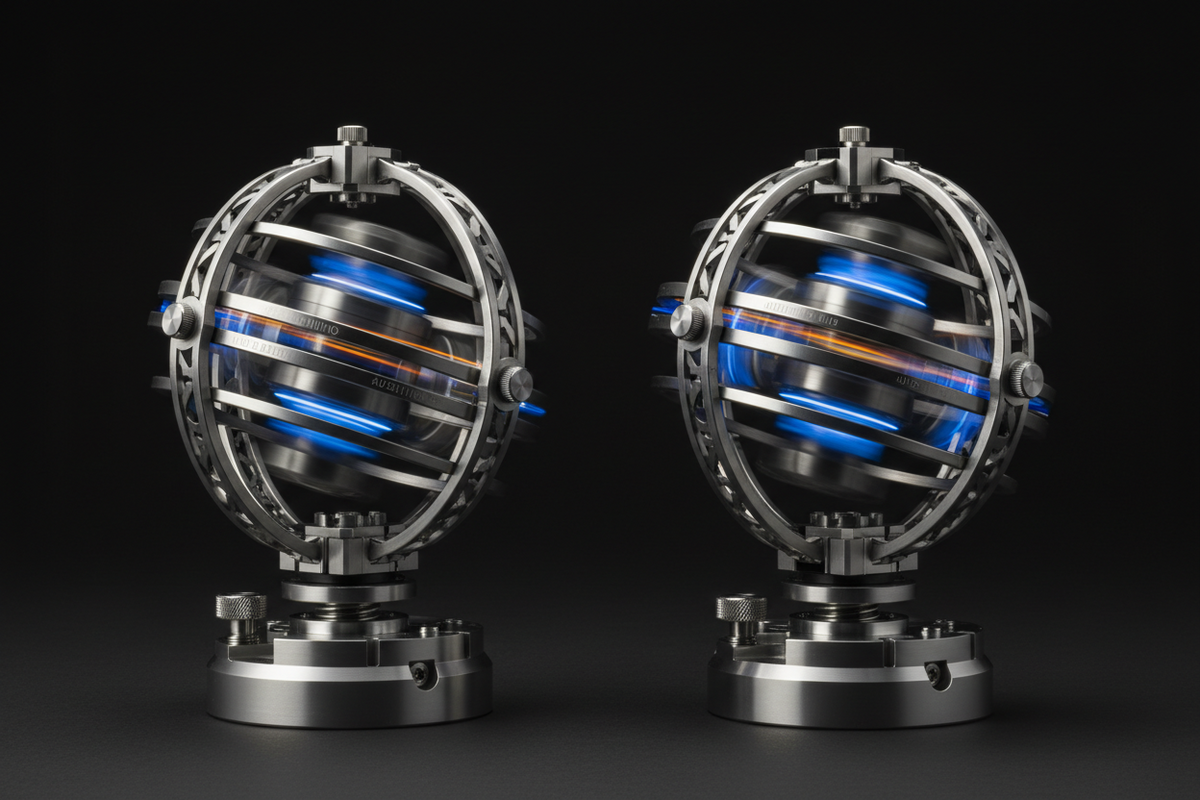
That is where the Oversuspension Gravitational Resonator acts: not on the steering or front braking, but by counteracting tire rebound the moment it is generated, to keep the wheel glued to the ground.
Before looking for the solution, identify the phenomenon. Chattering under front braking is chattering. Steering wobble is shimmy. And that loss of composure in the rear end during acceleration and on bumps is rebound—the one that neither of the other two solutions touches. → FIND YOUR KIT