
What is chattering in motorcycles and how does it affect traction and stability
There's a feeling every rider recognizes, though few can name it.
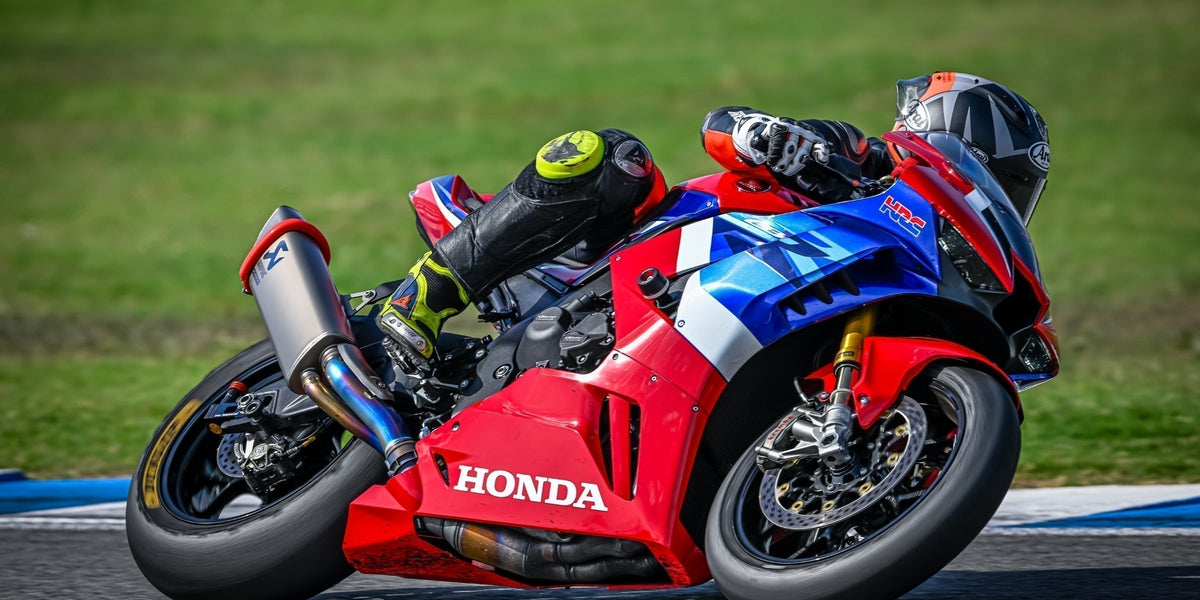
You're leaned over in a corner, smoothly accelerating out of the apex, and suddenly the rear wheel starts to chatter. It's not a slide. It's not a clean loss of traction. It's something worse: a quick, violent, unpredictable oscillation that travels through the chassis from back to front and up into your hands. For an instant, the bike stops being yours.
That's chattering.
The problem suspension alone cannot solve.
Chattering isn't a suspension fault. It's the dynamic signature of a conflict between two systems operating at incompatible frequencies.
A conventional shock absorber typically operates at a frequency of between 1 and 2 cycles per second. This is sufficient to manage chassis elasticity, absorb major terrain impacts, and keep the rear end controlled in most situations.
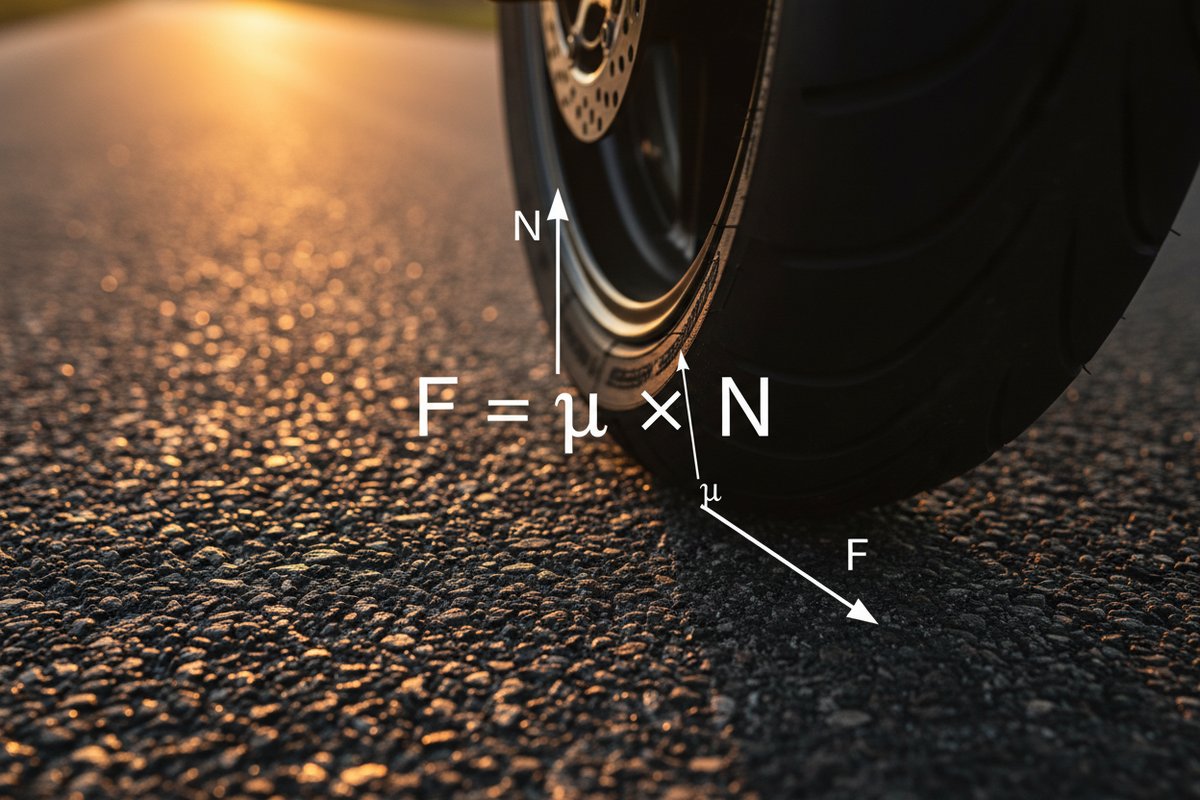
The tire is an entirely different system. When it enters a corner with simultaneous lateral load and acceleration, the rubber deforms, accumulates energy, and releases it in the form of a rebound. This rebound occurs at a frequency of between 15 and 20 cycles per second. That is eighteen times faster than the suspension can respond.
What happens in that interval — between the moment the tire releases energy and the moment the shock absorber reacts — is chattering. The wheel oscillates uncontrollably. The asphalt receives impacts instead of continuous pressure. Traction cyclically collapses.
Why you feel it more under certain conditions
Chattering doesn't appear at random. It has very precise favorable conditions.
It becomes more intense when the asphalt and tire are hot, because softer rubber accumulates and releases energy with greater amplitude. It is most noticeable on corner exits because this is the moment of maximum combined load: weight transferred to the rear end, engine torque applied, and still significant lean angle. It is also more common on powerful bikes because the energy introduced by the engine into the tire is greater and the rebound frequency skyrockets.
And it disappears, or lessens, when you reduce exit speed, when you ease off the throttle, when the tire cools down. All these are signs that the problem isn't poorly adjusted suspension or a worn tire. It lies in a rebound frequency that remains unmanaged.
What the rider does to compensate
The human body is an adaptive system. When it detects an oscillation it cannot control, it seeks ways to reduce it.
Most riders who experience chattering develop unconscious compensations: they anticipate throttle opening, reduce lean angle, release the throttle more carefully, tense up on the handlebars. All these responses have something in common: they reduce performance. The rider is fighting the physics of the tire with their own body, absorbing energy that should be going to the asphalt.
That is the real fatigue of a day of chattering. It's not muscular. It's the exhaustion of maintaining control over a system that doesn't have the necessary elements to control itself.
The missing frequency in the equation
Solving chattering requires acting at the same frequency at which it occurs. Not at the frequency of the shock absorber. At the frequency of the tire.
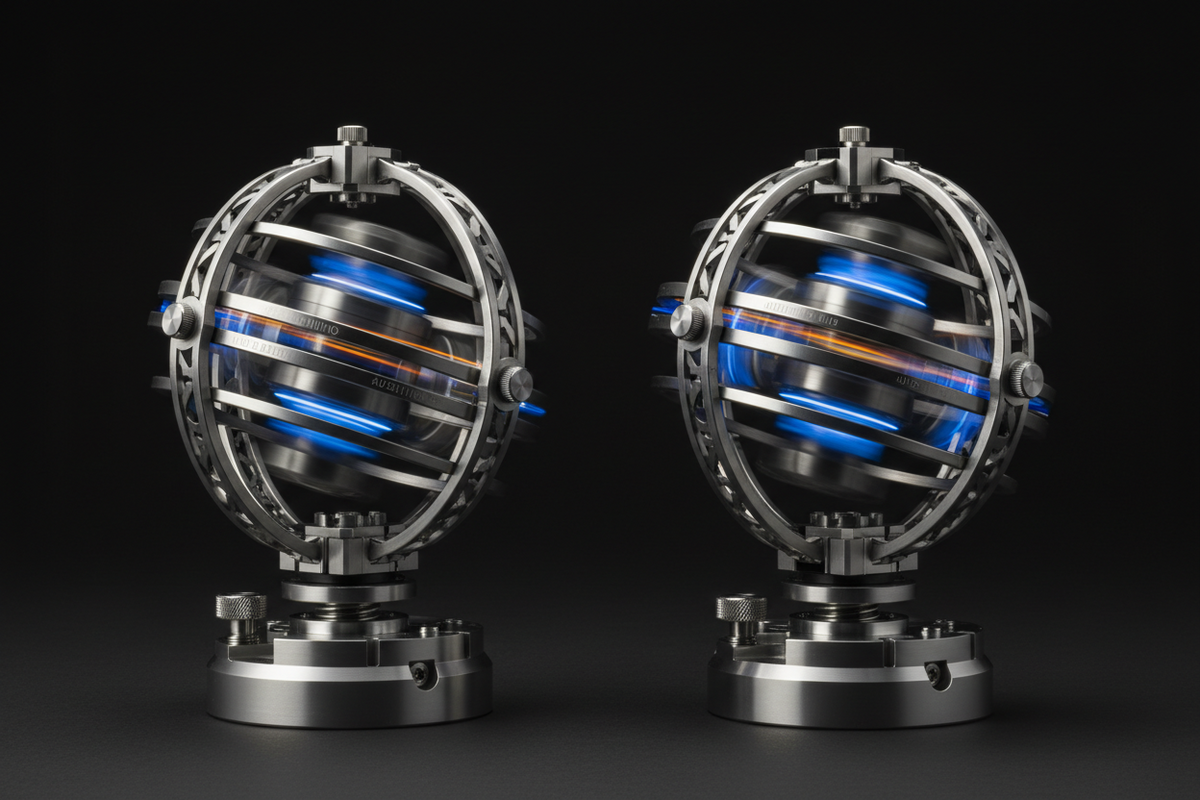
An Oversuspension gravitational resonator installed at the end of the swingarm operates exactly in that range: between 15 and 20 cycles per second. Its mass moves in counter-phase to the energy released by the tire, canceling the oscillation at its origin. Not after it has propagated through the chassis. Not after the rider has felt it. Before.
Chattering doesn't disappear because someone dampens it
It disappears when the response occurs at the same frequency at which the oscillation is generated.