
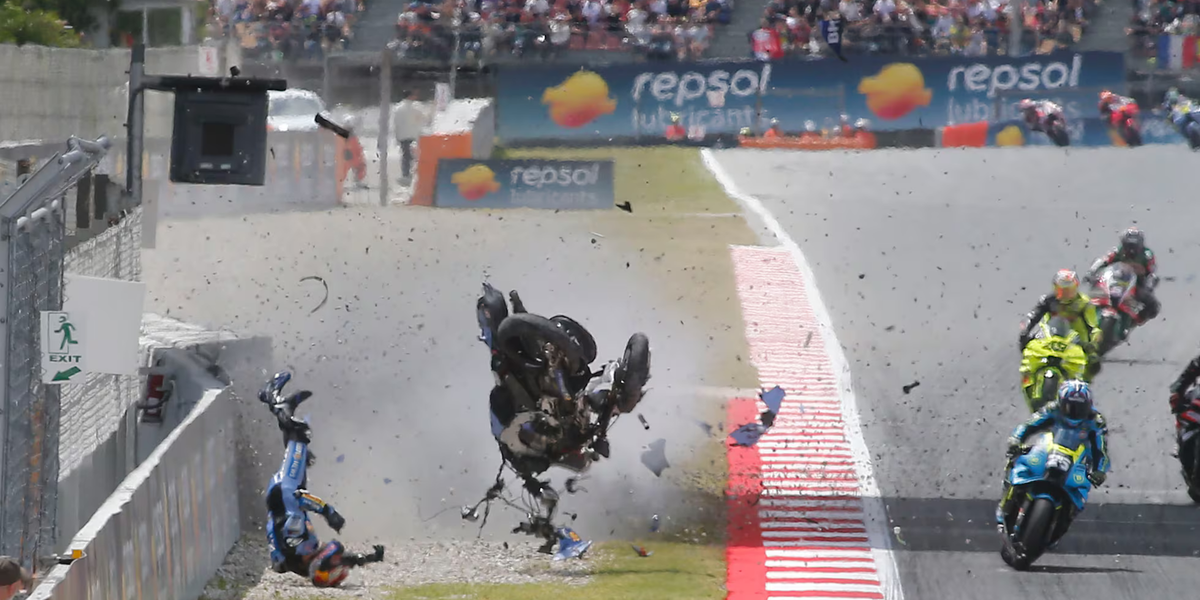
No safety net
On a track, when something goes wrong, the system is designed to give you a second chance. Gravel slows your slide. Barriers absorb the impact. A medic is there in ninety seconds.
On the road, none of that exists.
You are alone. The road was not designed around you. It was designed around cars: bodywork, airbags, crumple zones. Guardrails, curbs, trees: none of them give way.
That absence of an escape route changes everything.
You cannot always control the fall. You can control what takes the hit. What you wear doesn't prevent the fall, but it determines what happens to you when you fall. The helmet, jacket, riding pants, gloves, boots with approved protectors. Helmet. Jacket. Riding pants. Gloves. Boots with approved protectors. And now, technology once reserved for competition: an airbag built into a jacket or vest, detecting a fall in milliseconds and deploying before your body hits the ground.
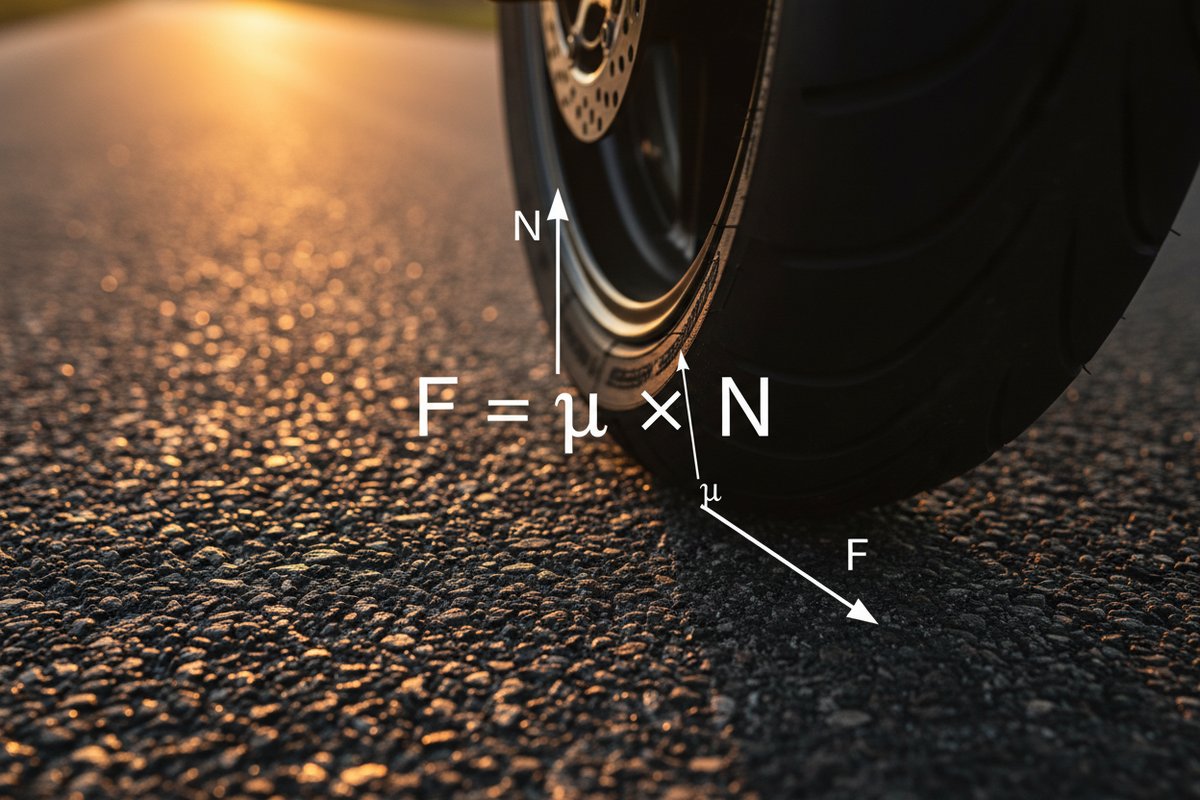
The second margin is control. Before impact, there is an instant when it is still possible to avoid it. ABS, traction control, and stability systems can make all the difference in that instant. But they all work on the same principle: the tire's contact with the asphalt. When that contact exists, the systems have data and can act. When the tire lifts off the ground, even for milliseconds, the electronics are blind. Without information. Without the ability to intervene.
It happens thousands of times per kilometre: every bump, every ripple, every break in the asphalt, with more intensity exactly where you have the least margin: wet asphalt, emergency braking, a corner where grip is already limited.
Keeping the tire glued to the asphalt keeps danger from getting in before your safety systems can react.
Because when something goes wrong on the road, the only thing between you and the consequences is what you chose before you even set off.