
Frequency and regulation
Frequency and Adjustment: How to Tune the Gravitational Resonator to Your Motorcycle
To understand how Oversuspension is adjusted, there's a physical concept that explains everything: frequency.
Frequency measures how many times an event repeats per unit of time. Its unit is the Hertz (Hz) and its definition is precise: 1 Hz equals 1 complete cycle per second. In the context of the Gravitational Resonator, a cycle is a complete up-and-down movement of the mass. Higher frequency means more cycles per second. Lower frequency means fewer cycles.
And that frequency is exactly what you control when you make an adjustment.
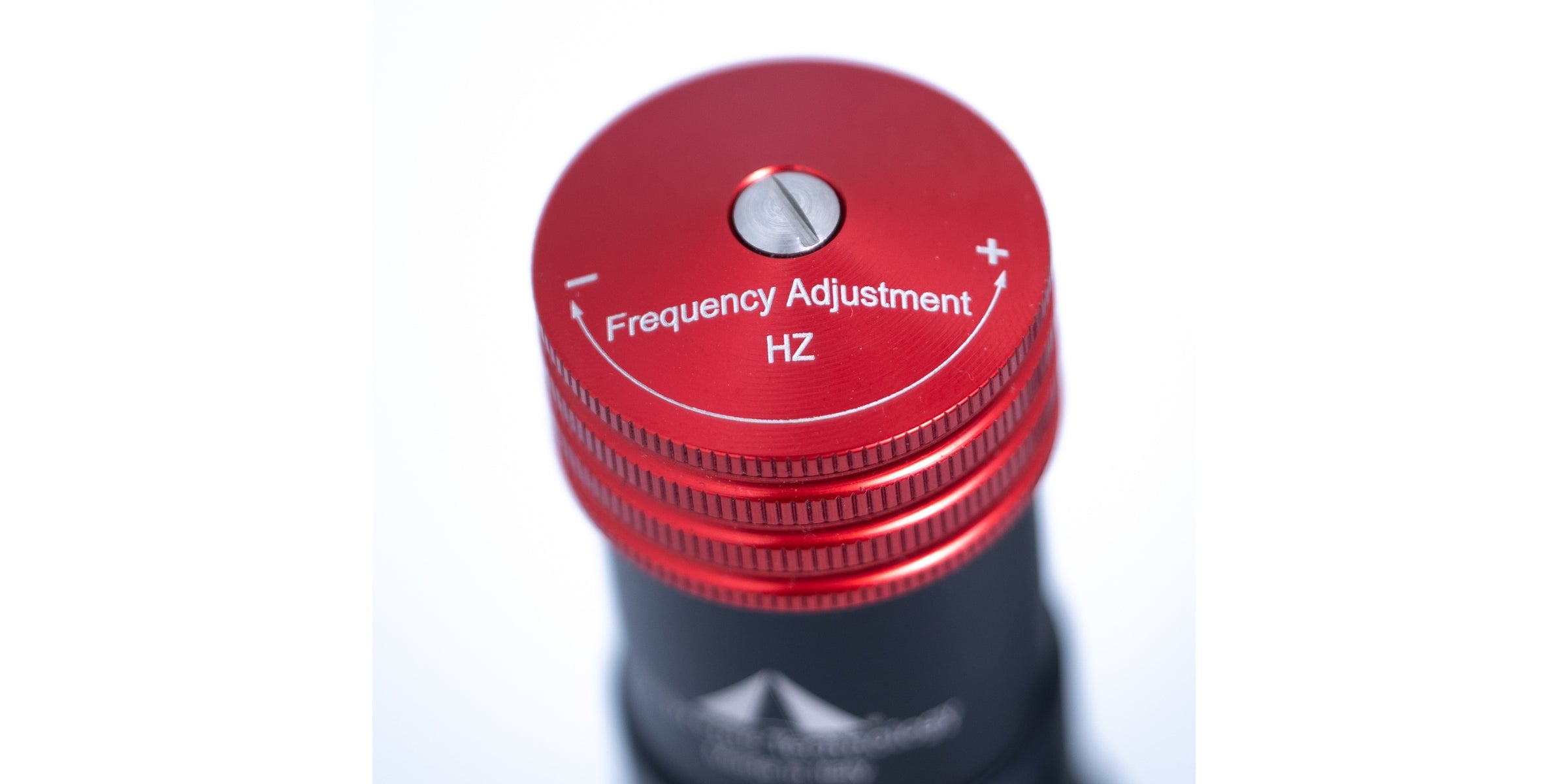
Adjustment towards +: higher frequency, livelier response
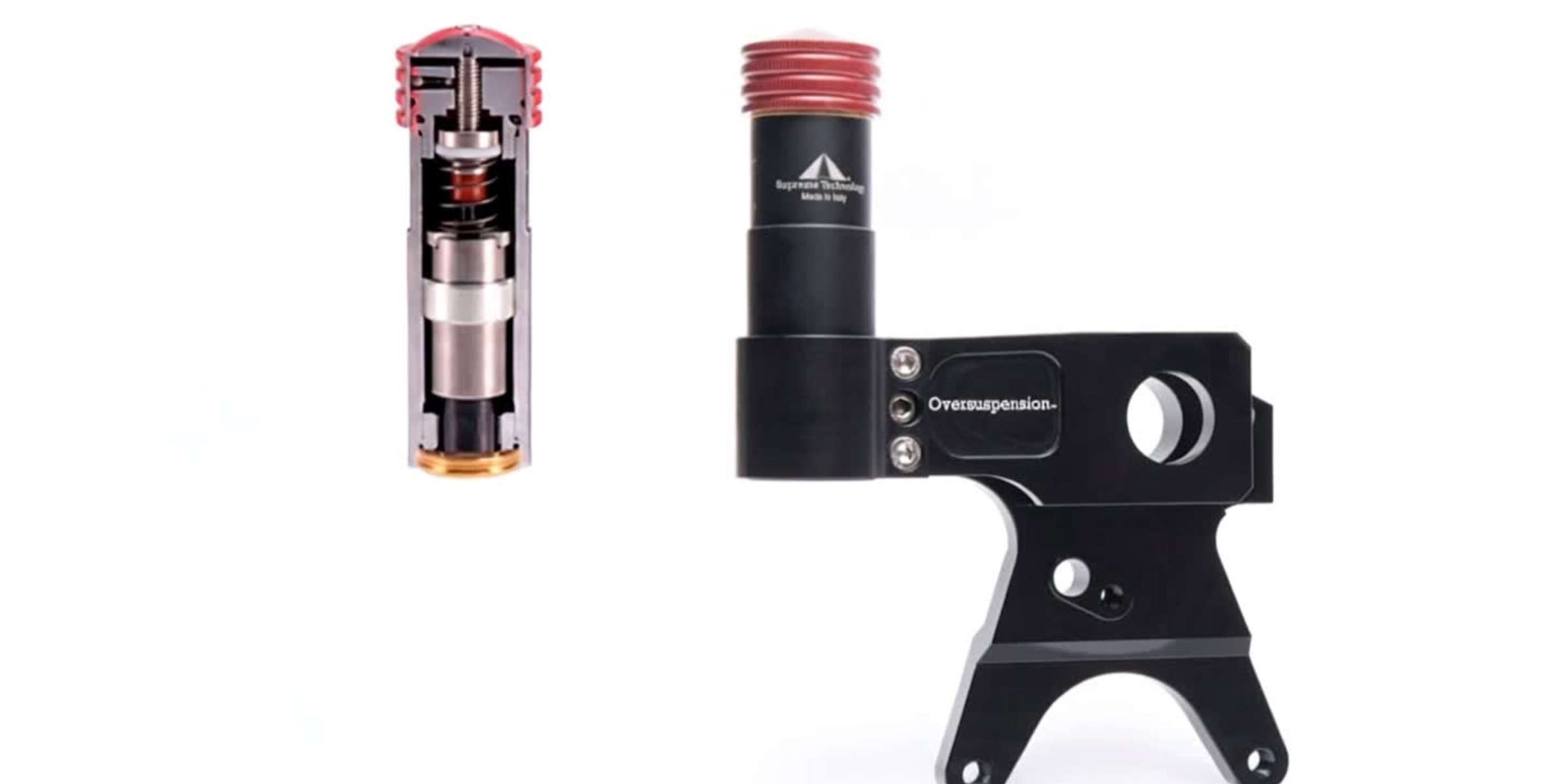
When you turn the adjustment towards +, you are loosening the spring. The mass of the Resonator has less resistance to move, which means it needs less excitation from the tire to complete a full up-and-down cycle.
The result is a system that responds to lower intensity disturbances. More cycles per second. More Hz. A faster and more sensitive response to tire vibrations.
This setting is suitable for pavements with frequent, low-intensity irregularities: deteriorated asphalt, cobblestones, secondary roads with a lot of texture. Terrains where the tire generates constant but moderate amplitude disturbances.
Adjustment towards −: lower frequency, firmer response
When you turn the adjustment towards −, you are compressing the spring. The mass needs greater excitation to move, to overcome the additional resistance of the compressed spring and complete its cycle.
The result is a system that only responds to higher intensity disturbances. Fewer cycles per second. Fewer Hz. A more contained and more selective response.
This setting is suitable for cleaner, more regular pavements where disturbances are isolated but of greater amplitude: isolated potholes, asphalt layer changes, speed bumps. Terrains where the tire generates less frequent but more intense impacts.
In summary:
+ Hz → loose spring → greater sensitivity → more cycles per second → response to frequent, low-amplitude disturbances.
− Hz → compressed spring → greater selectivity → fewer cycles per second → response to isolated, high-amplitude disturbances.
Just like with your motorcycle's suspensions, find the adjustment where you feel comfortable and enjoy the ride.