

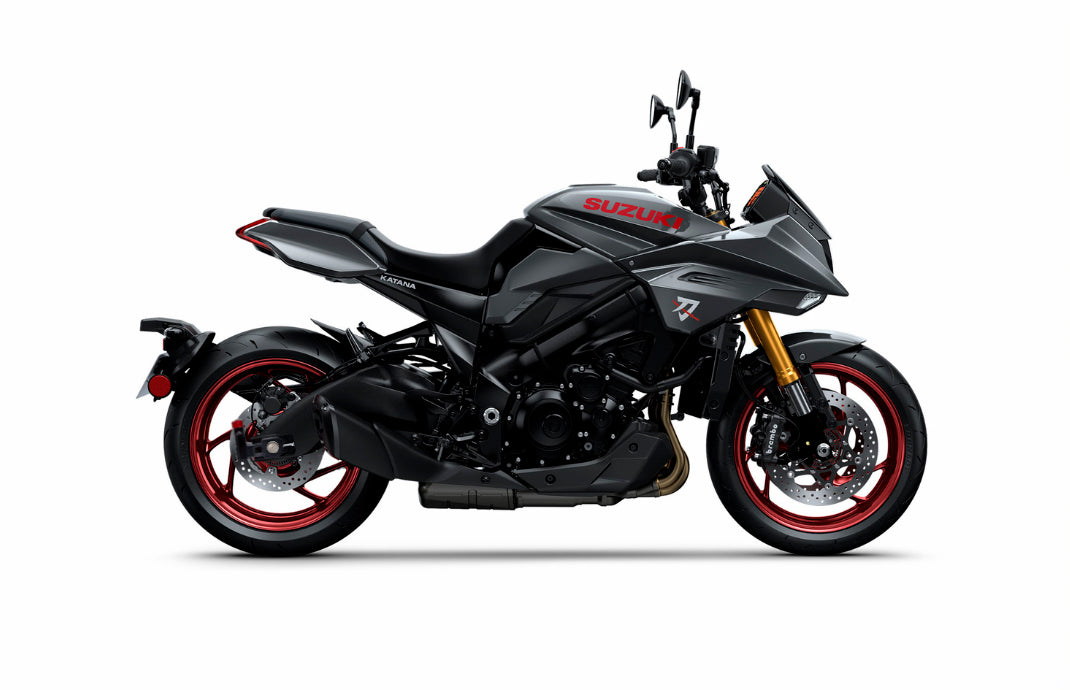
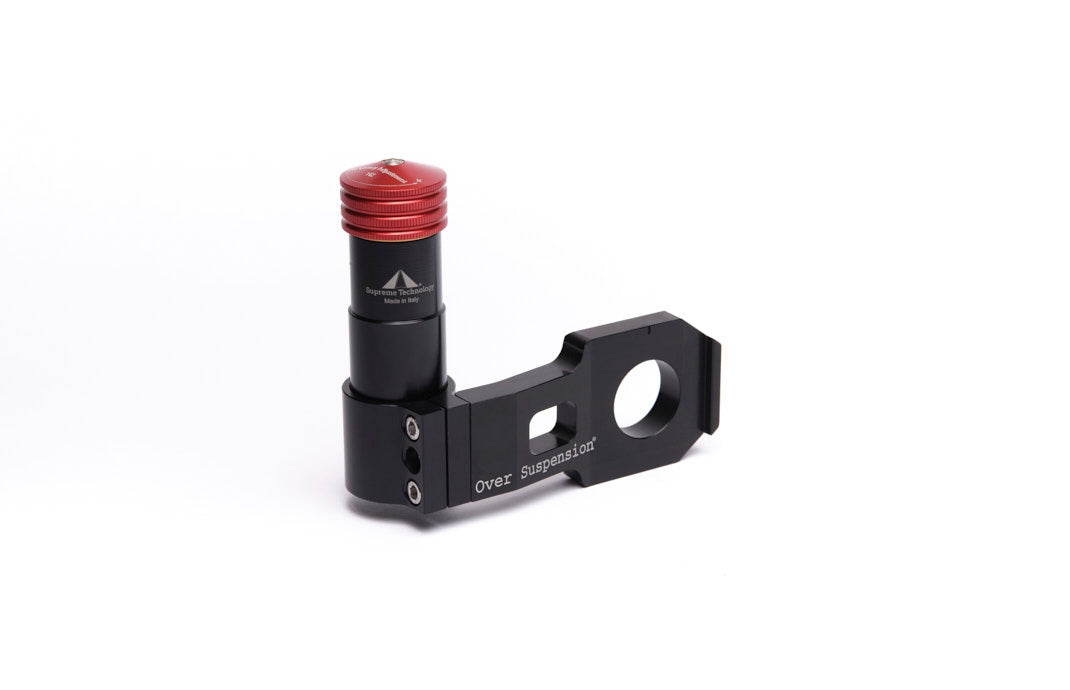
Kit Oversuspension for SUZUKI Katana 1000 YEARS 2019-2023
Free EU
shipping
93-day
trial
Pay in
instalments
Lifetime
warranty
Ships within 24/48 business hours · Free returns
Fits SUZUKI Katana 1000 · 2019-2023
Not sure about your version? Ask us before you buy
- No more chattering in corners
- Lower risk of highside
- Brake later and stay composed
- Less strain on arms and wrists
Greater Safety and Better Performance for Your Motorcycle:
More traction, better braking, reduced tire wear, and less fatigue while riding.
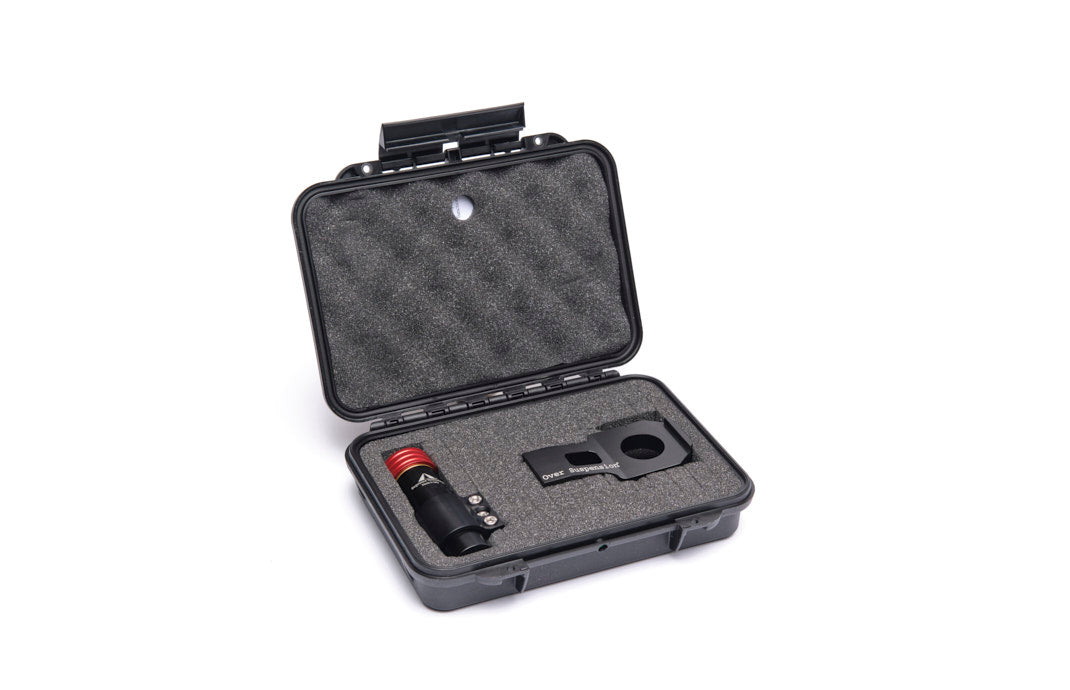
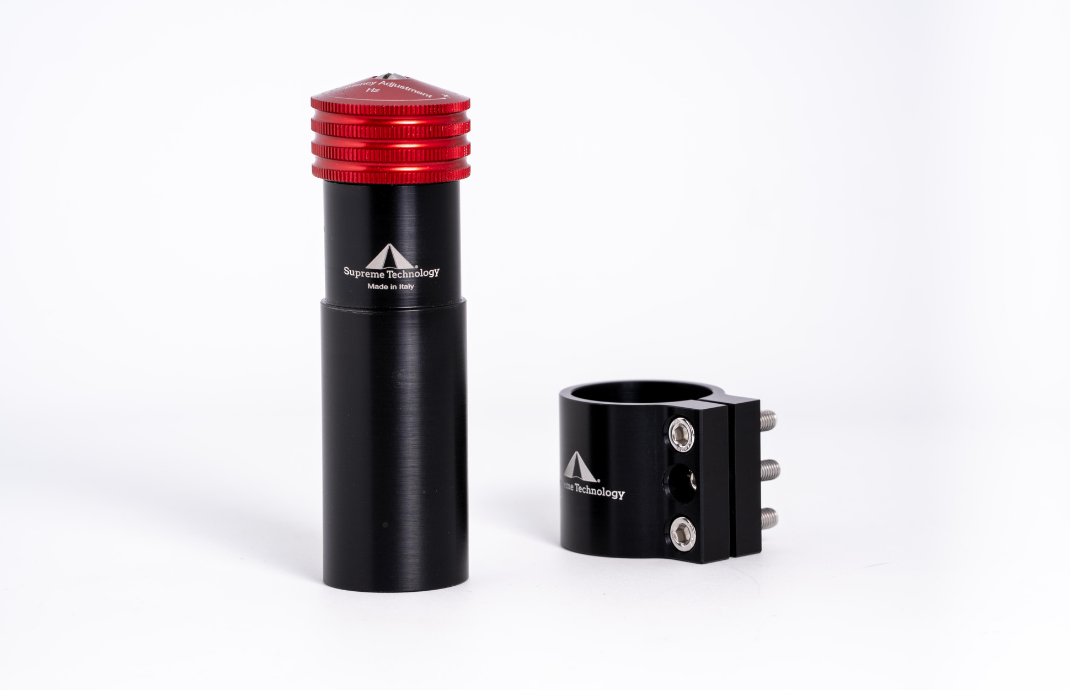
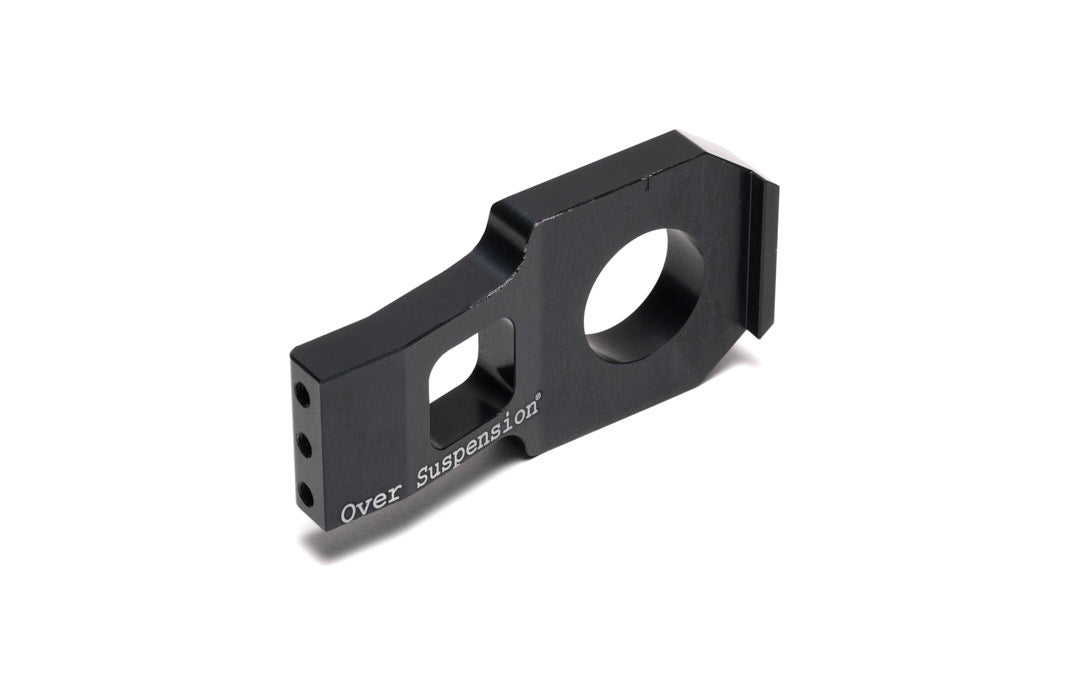
Kit includes: Support #0049, cylinder, clamp, screws, installation manual, and sealed box.
TECHNICAL SPECIFICATIONS
- Lightweight alloy body made of Ergal 7075 and 0.02 mm anodized
Internal plain bearing composed of two half-shells made of Kevlar and PTFE reinforced composite material. - Striking mass made of sub-micron grain sintered tungsten, mirror polished and ground at both ends.
- Spring guide cap made of Kevlar and PTFE reinforced composite.
- Spring made of chromosilicon alloy subjected to two controlled shot peening cycles before and after heat treatment, with the head coils subjected to precision grinding.
- Cap made of lightweight 6082 alloy and anodized.
- Spring preload assembly made of Kevlar reinforced composite.
- Red knob made of Ergal 7075.
- Bracelet made of 2024 Avional alloy and black anodized.
- Coupling made of lightweight 6085 alloy and obtained from a destressed plate.
- Shock absorber, based on polyurethane with reserved composition powders.
- All screws and nuts made of AISI 316 steel.
- Velocite No. 3 ISO VG10 type lubricant with added PTFE.
- NBR70 sealing O-ring.
- Washable marine grease for knob lubrication.
TRY IT FOR 93 DAYS
Only satisfied customers.
You have 93 days to experience Oversuspension on your bike with complete peace of mind.
And if you don’t feel greater stability, confidence, and a smoother riding experience, simply return it with no commitment.
No questions asked. We’ll arrange collection from your home within 72 hours, with no return shipping costs, and you’ll receive an immediate refund once we receive the producto.
LIFETIME WARRANTY AND AFTER-SALES SUPPORT
Our highest production standards and the quality of our materials allow us to guarantee the lifetime operation of the device (impacts and scratches are excluded).
Activate your warranty here.
Furthermore, if you change motorcycles, you only need to invest in the mount.
Choose options
Your bike bounces
Every bump, every seam in the tarmac and every stone on the track throws the rear wheel upwards. While it is in the air, the tyre doesn't grip, doesn't brake and doesn't steer.
You don't feel it as a jump. You feel it as a bike that moves out of corners, a front end that shakes under braking and more strain on your arms and wrists at the end of the day. On broken tarmac, even more.
Why doesn't your suspension fix it?
Your suspension works on the chassis, at a rate of around one cycle per second. Tyre bounce happens many times faster, at a frequency no shock absorber can follow, however good it is. Not even an electronic one.
That's why Oversuspension doesn't replace your suspension: it does what your suspension can't.
How it works
It mounts on the swingarm, next to the rear wheel. Inside there is a tungsten mass and a precision spring.
When the tyre bounces, the mass absorbs that energy and returns it by pushing the wheel back onto the ground. Up to 35 times per second.
No electronics, no cables. You adjust it with the red knob to suit terrain, load and weather, and it only needs the bolt torques checked now and then.

Race-tested with Michele Pirro
Sounds too good to be true?
Many of our customers thought so too. A mechanical cylinder that promises more traction and less vibration invites doubt. That's why we don't ask you to take our word for it: we give you 93 days to test it on your bike.
Read what other riders say after their first few kilometres.
What riders notice once it is fitted
"I fitted it to my BMW R nineT and the ride feels much smoother. The chassis feels more composed over uneven tarmac."

"Where I used to feel a hard knock over a bump, it now feels like a damped, controlled impact. The bike settles much faster after a jump or bump"
"I tried my Kove 800X Pro with the Oversuspension fitted and was surprised by the big improvement. On a rocky climb where my friend got stuck, I went up with no traction problems, as if I had a special system"
DO YOU NEED HELP?
FAQ
Yes. Chattering is a conflict between two systems working at incompatible frequencies. The shock absorber works at between 1 and 2 cycles per second; tire rebound, in a much wider and faster band, which in corners is around 15 to 20 cycles per second.
Oversuspension is calibrated to operate between 2 and 35 Hz, right where the suspension cannot reach: its mass moves in counter-phase to the energy released by the tire and cancels the oscillation at its source.
A highside starts when the rear wheel, after losing grip and sliding, suddenly regains it. Oversuspension acts on the unsprung mass and keeps the rear wheel in contact with the tarmac.
The best protection against a highside is not knowing how to fall: it is not falling at all. Oversuspension doesn't correct crashes. It prevents them.
Towards +, you loosen the spring and it responds to frequent, low-intensity vibrations; towards −, you compress it and it responds to occasional, more intense impacts.
- Wet (WET): fully open towards +.
- Dry, undulating track: close 4 clicks towards − on the 24-click device, or 2 clicks on the 18- and 12-click devices.
- Dry, smooth track: the whole adjustment open towards +.
No. Tire rebound is not a track phenomenon: it is a tire phenomenon.
On the track it gives you time back: continuous traction when accelerating from the apex and stability under braking. On the road it gives you margin: the wheel stays planted in the corner with gravel you didn't see, when braking over a patch, when overtaking on broken tarmac.
We were the first. Teams such as Ducati Corse, VR46, Gresini Racing, HRC, Yamaha and KTM have used Oversuspension technology, and today the grid still uses devices that work on the same principle: controlling tire rebound.
What the elite of motorcycle racing has validated on the track, you can have on your bike.
No chip, no sensor, no ECU: Oversuspension does not connect to your motorcycle's electronics and does not compete with them.
Electronics manage the consequences milliseconds later; mechanics act in the instant. A tire that does not lift off is a tire on which the ABS always has grip to modulate and traction control always has support to manage.
No. The device is the same for every motorcycle; you only need to buy the bracket for your new model. You'll find them in Extra brackets.