
Cold tire, maximum rebound
The first 15 minutes: cold tire, maximum rebound.
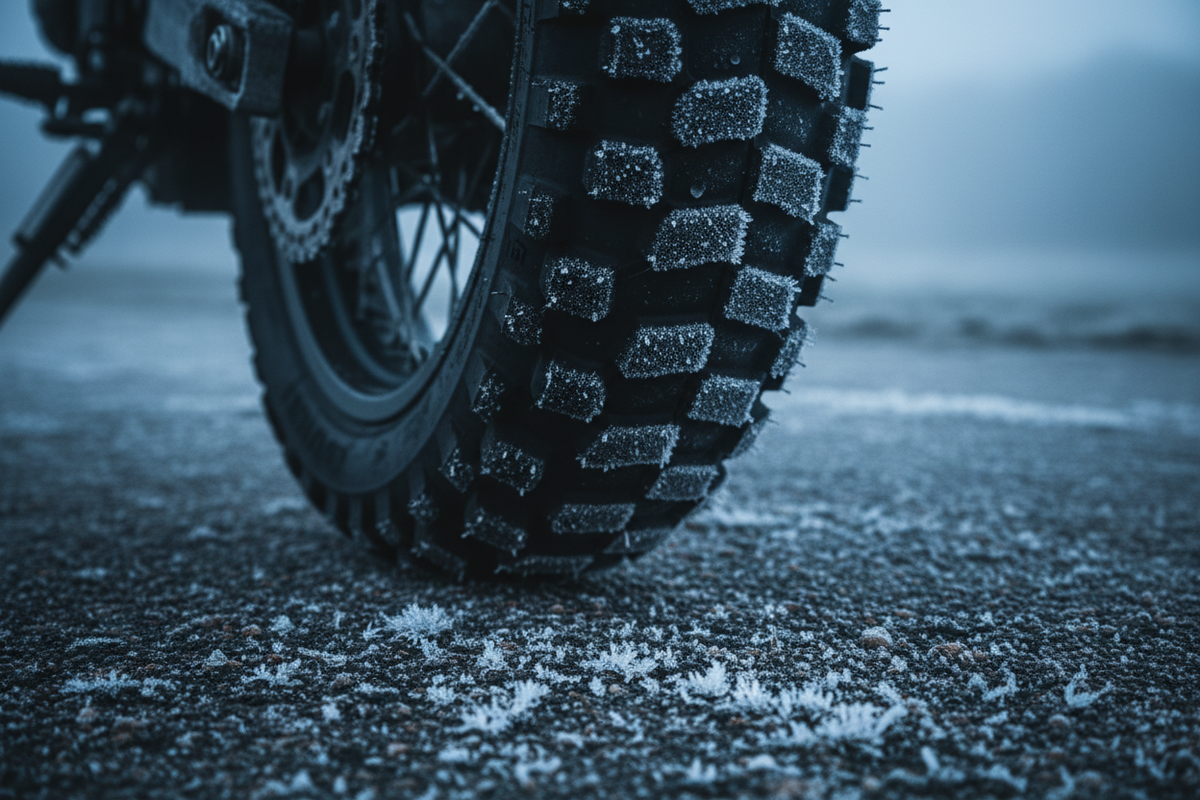
Every rider knows it intuitively: the first few kilometers of every ride are different. The bike feels stiffer, grip is less confident, and confidence is slow to build.
It's not a feeling. It's chemistry.
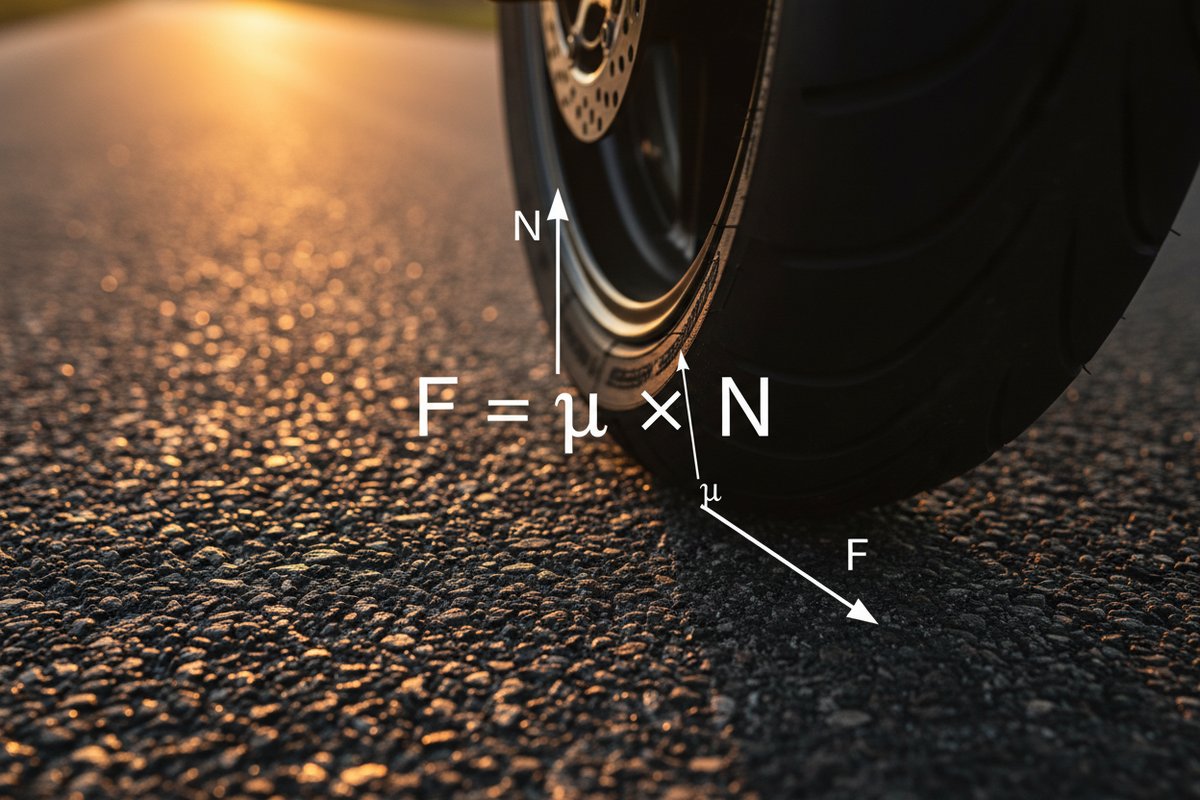
Rubber is a material whose properties directly depend on temperature. When cold, it is stiffer, less grippy, and returns more energy with each deformation. When hot, it becomes softer, conforms better to the asphalt, and dissipates more energy as heat.
And that difference is not a nuance. It's why a disproportionate number of street crashes occur in the first few minutes of riding.
What happens to hysteresis when the rubber is cold
We've already explained on this blog what hysteresis is: the ability of rubber to absorb energy when deformed and not return all of it, dissipating some as heat. It's the only internal mechanism that mitigates rebound within the tire.
[Of course] With cold rubber, this mechanism works minimally. The rigid compound deforms less, absorbs less, and returns more. Each impact against an irregularity in the asphalt generates a drier, faster rebound with more energy than the same impact with the tire at operating temperature.
The result is an uncomfortable paradox: the moment you have the least grip is exactly the moment your tire rebounds the most.
Less hysteresis means less internal absorption. Less absorption means more energy released in each expansion. More released energy means more micro-lifts from the asphalt. And each micro-lift, on a rubber that already grips less because it's cold, reduces a margin that is already narrow in those first few kilometers.
Why warming up tires on the street doesn't work as you think
Track riders warm up tires with blankets or aggressive warm-up laps. Street riders inherit that idea and zigzag for the first few kilometers or brake and accelerate sharply.
[Likely] On the street, none of these techniques significantly warm up the tire. Operating temperature is reached by an accumulation of deformation cycles—kilometers ridden under normal load—not by specific maneuvers. Manufacturer studies place the actual warm-up of a street tire at several minutes of continuous riding, more so the lower the ambient temperature.
Throughout that entire interval, the risk window is open: rigid rubber, minimal hysteresis, maximum rebound. And there is no riding technique that can close it prematurely.
The mechanism that does not depend on temperature
Here is the structural difference of the Gravitational Resonator compared to any solution based on the compound.
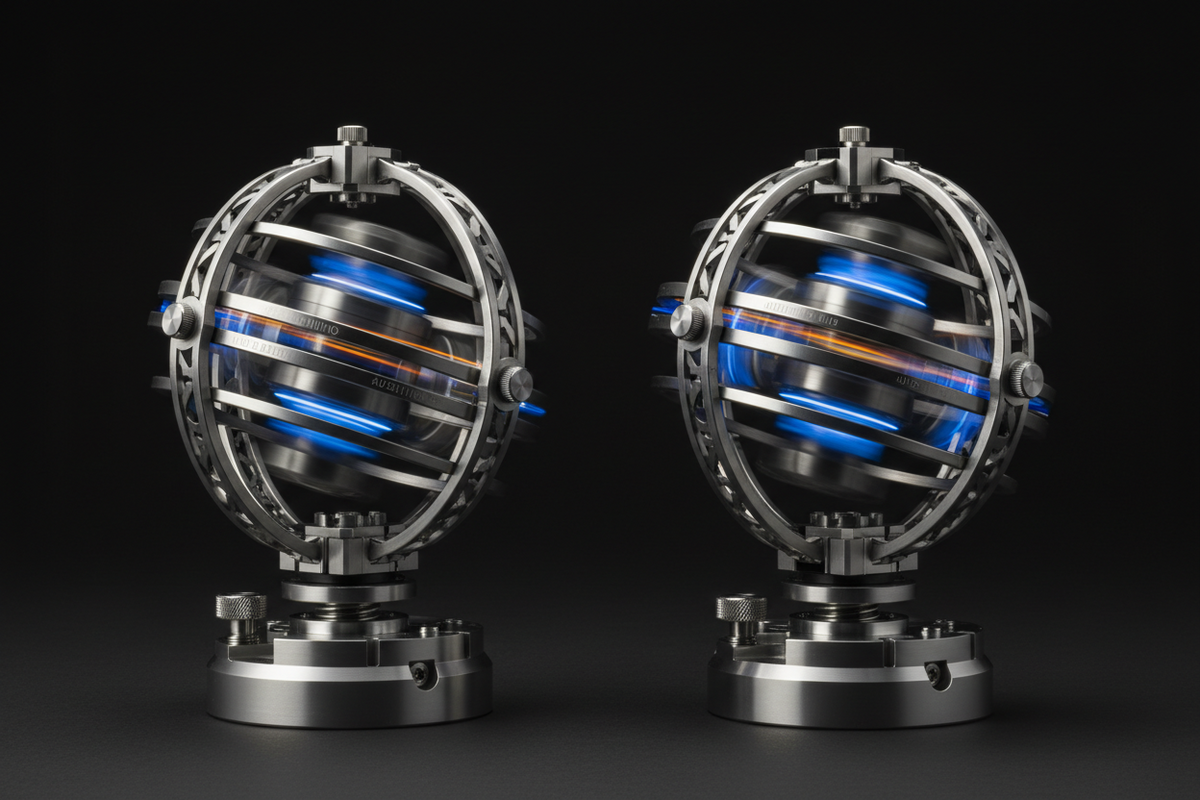
[Of course] The Resonator is a mechanical system: a tungsten mass, a precision spring, and a polyurethane buffer working out of phase with the tire's rebound. Its operation does not depend on the temperature of the rubber. It generates the same downward force on the tire at kilometer one as at kilometer one hundred.
This means it acts exactly where the cold tire is most vulnerable: in those first few minutes when hysteresis has not yet reached its operating range and the rebound is released with all its energy.
The Resonator does not heat the rubber or replace the caution required in the first few kilometers. What it does is close the gap between the grip the cold tire can provide and the contact it needs to maintain to provide it.
Leaving home is also a road
We talk a lot about the wet curve, the treacherous pothole, the extreme braking. Obvious risk scenarios that any motorcyclist identifies.
The cold tire does not have that drama. It's the roundabout 500 meters from your garage. The same old traffic light. The curve you've ridden a thousand times. Territory so familiar that your guard is down just when physics is against you.
The first 15 minutes do not forgive routine. And the wheel has the same mission at kilometer one as at all others: to stay glued to the ground.